

How the economy reaches markets through expectations.
Connect inflation, rates, employment, growth, credit, the Federal Reserve, earnings, valuation, and market cycles without treating one data point as a trading signal.
Read expectations, not headlines in isolation.
Topics in this course
Understand how growth, inflation, labor data, policy expectations, rates, and market pricing connect. Use the course to trace a signal from the release through the economic mechanism to asset prices.
From economic data to asset prices: follow the transmission chain
Interpret growth, inflation, labor, consumption, earnings, and financial conditions by tracing how each data point can affect cash flows, rates, credit, currencies, and risk appetite.
- The transmission chain
- Read macro news through the transmission channel to assets
- Key economic indicators
- Build a macro data map instead of collecting random headlines
- + 1 more sections
Policy, rates, inflation, and market pricing
Connect monetary and fiscal policy, inflation, interest rates, yield curves, discount rates, currencies, and valuation through the expectations already embedded in market prices.
- The Federal Reserve
- Rates travel through the economy in more than one channel
- The economy reaches stocks through company earnings
- Rates and valuation
- + 1 more sections
A weekly market review that separates signal from noise
Build a repeatable weekly market review using an event calendar, actual versus consensus data, revisions, rates, breadth, credit, currencies, commodities, and a dated review note.
- Read a market release in four passes
- Actual, consensus, prior, and revision are four different numbers
- Use an event calendar to separate planned risk from surprise risk
- Use separate calendars for economic and corporate event risk
- + 4 more sections
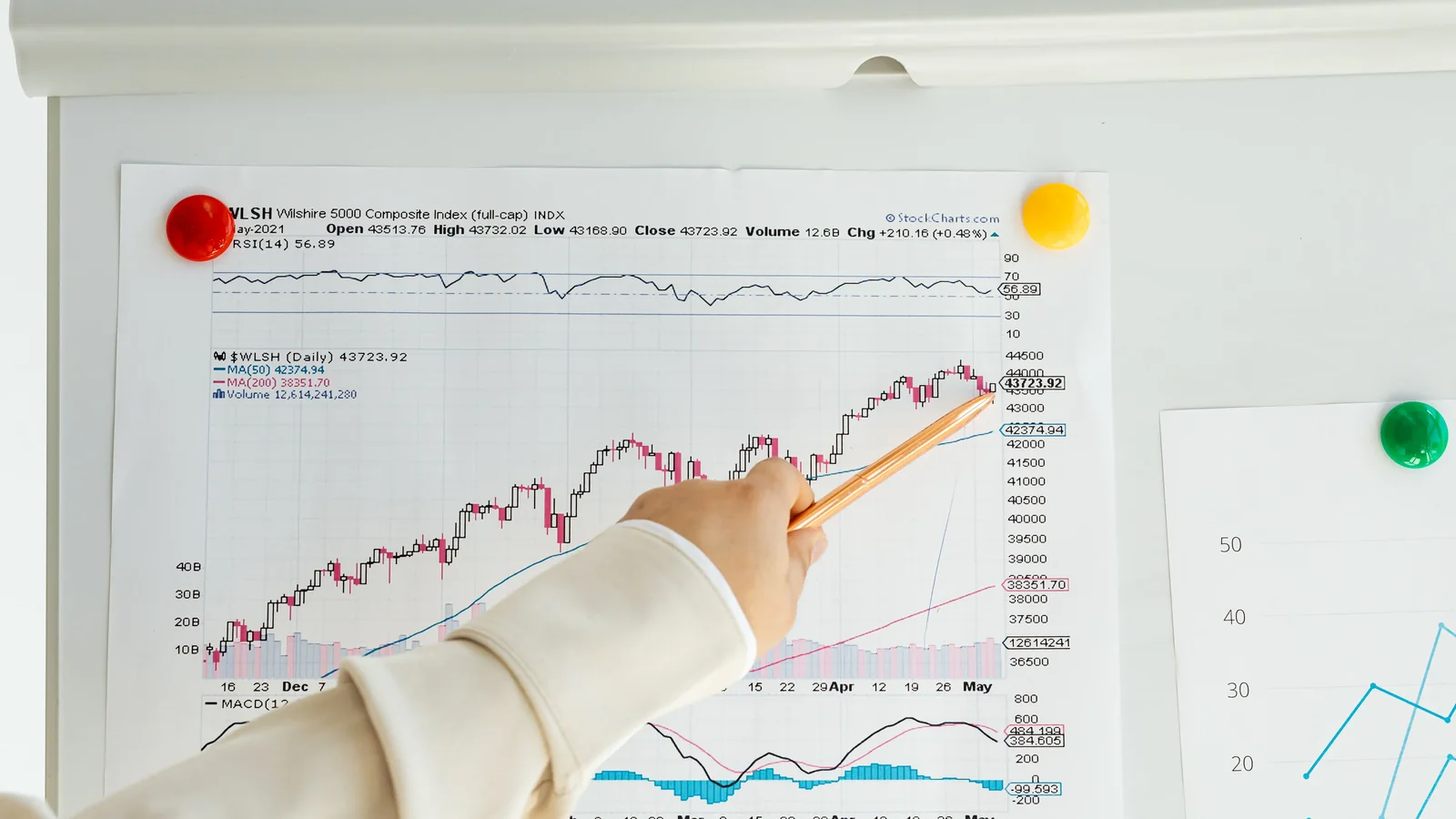
Follow the path from data to market pricing.
Economic releases matter through the channels they change: rates, earnings expectations, credit, currencies, and risk appetite. Read the transmission path before treating a headline as a market signal.
Read the guides in order for a complete path.
All 3 guides in this category are listed here in the recommended learning order. You can still open any guide directly from the navigation or search.
Use past market moves as context, not a forecast
Rate cycles, inflation shocks, recessions, earnings reactions, and recoveries occur under different starting valuations, policies, liquidity, and positioning. Review historical and hypothetical-information limitations →